

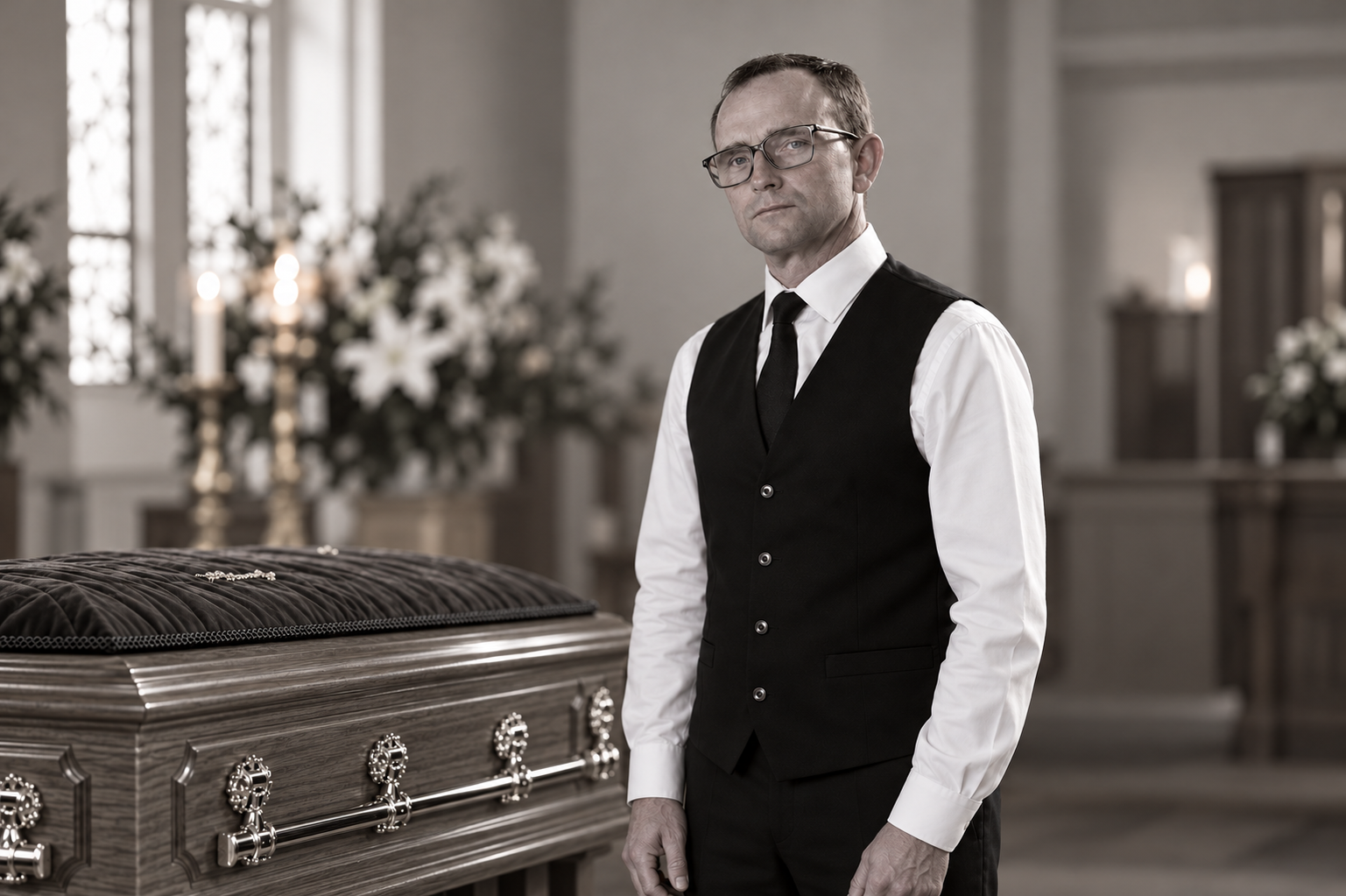
By Erich Falconer, Managing Funeral Director, James Falconer Undertakers, Tramore
If a death is expected at home, contact the person’s GP or follow the contact plan agreed with their healthcare team. In a hospital, hospice or nursing home, speak to the staff. If someone collapses unexpectedly or you are unsure whether they have died, call 112 or 999 immediately and follow instructions.
Once the immediate medical steps are underway, contact your funeral director. At Falconers in Tramore, we are available 24 hours a day on 086 847 5296.
You do not need to have the funeral planned before calling. We will explain each step and organise the practical funeral arrangements with you.
1. Make the first call
For an expected death at home, the GP or agreed healthcare contact will explain how the death will be confirmed. Outside normal hours, use the out-of-hours arrangements provided by the GP or healthcare team.
In a hospital, hospice or nursing home, staff will explain the medical steps and whether any further examination is needed. You can then contact your chosen funeral director.
For an unexpected death, the doctor or emergency services will explain any involvement of the Gardaí or coroner. Your funeral director can guide you while those steps take place.
2. Tell your funeral director what has happened
Start with your loved one’s name, where they are, what has happened and your contact number. Tell us whether you have spoken to a doctor or the staff caring for them.
You do not need to choose a coffin, decide on a ceremony or gather every document first. If you are finding the conversation difficult, ask someone you trust to sit with you.
3. We coordinate bringing your loved one into our care
Once the necessary medical confirmation and permission for release are in place, we arrange transport and care for your loved one.
We liaise with the relevant staff and explain what happens next. Where the coroner is involved, the timing may change: wait until release arrangements are confirmed before announcing funeral dates.
4. We arrange the funeral with you
We talk through your loved one’s wishes, burial or cremation, the ceremony and where people will gather.
We coordinate the agreed arrangements, including transport, the funeral venue, cemetery or crematorium, death notices, music and flowers. We can also discuss catering and livestreaming.
You tell us what matters to your family; we take care of coordinating the funeral. We explain the costs and provide a written breakdown, including charges from other providers. Citizens Information explains funeral arrangements and costs.
What choices do you have?
Burial means being laid to rest in a grave; cremation allows ashes to be returned afterwards. Either can be accompanied by a religious or non-religious ceremony. A humanist funeral focuses on the person’s life without religious worship.
Falconers also provides guidance on eco funeral choices, water cremation and repatriation—bringing someone home from another country. We explain availability, arrangements and costs so you can make an informed choice.
What paperwork and financial help should you ask about?
Registering the death is separate from arranging the funeral. We explain what you need to do, while the doctor and registrar carry out their respective roles.
The HSE’s death registration guide explains the documents and appointment process. Where a coroner’s certificate is issued following a post-mortem or inquest, the registration process differs.
If costs are a worry, tell us early. The Community Welfare Service may provide assistance through an Additional Needs Payment, depending on your circumstances.
If a parent or loved one is seriously ill
Ask their healthcare team whom to contact if death occurs at home, including overnight or at weekends. Keep those numbers somewhere easy to find.
If your loved one wishes to talk, gently discuss their funeral preferences. Our Funeral Wishes resource can help you record them. You can speak to us beforehand, too.
After the funeral, offer something specific
“Let me know if I can do anything.”
It is kindly meant, but it leaves someone who is grieving with another task: working out what to ask for.
Try:
- “Would it help if I dropped the children to school on Tuesday?”
- “Could I leave dinner at your door tomorrow?”
- “Would you like me to cut the grass this weekend?”
Ask first, respect their answer and offer only what you can do. Keep checking in after the funeral. The HSE recommends specific, practical support.
For someone who needs to talk, the Irish Hospice Foundation’s Bereavement Support Line is 1800 80 70 77, Monday–Friday, 10am–1pm.
Save this guide or share it with someone caring for a loved one. Knowing whom to call can make a difficult moment less confusing.
For funeral guidance in Tramore or Waterford, call James Falconer Undertakers on 086 847 5296, available 24 hours a day.